What "strongest" really means
"Strongest" gets used loosely. A higher milligram number on a label isn't the same as a better outcome: more medication often means more side effects, not more benefit. A more useful way to compare treatments is along three axes:
- Mechanisms targeted. Does it act only on blood flow, or also on the brain's arousal signaling?
- Delivery format. Swallowed, chewed, or dissolved under the tongue, which changes how and how fast it's absorbed.
- Fit to you. A dose and formula matched to your health and response, rather than one-size-fits-all.
With that framing, "strong" becomes less about a single number and more about how completely a treatment addresses your ED.
Single PDE5 inhibitors
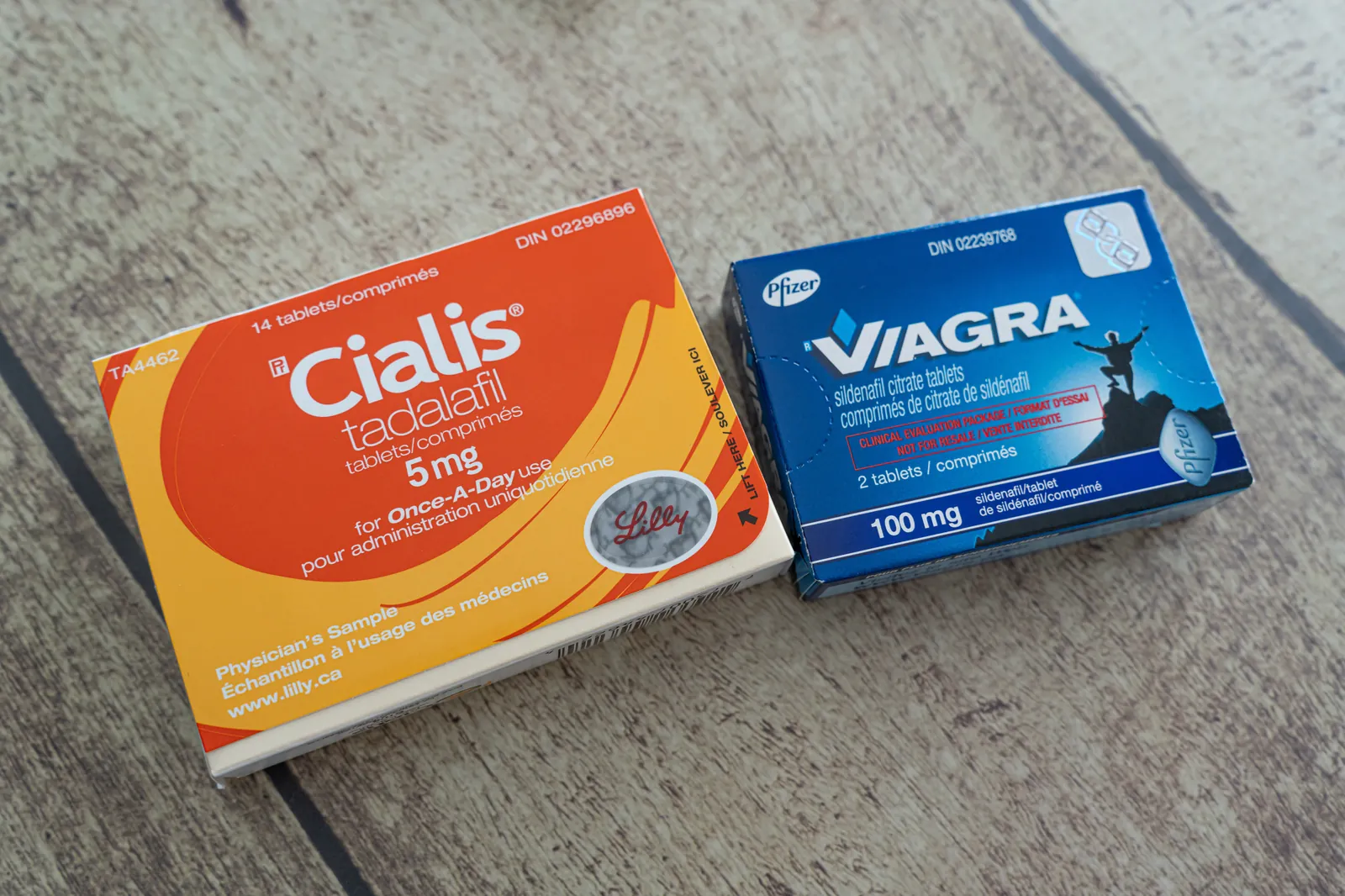
The foundation of modern ED treatment is the PDE5 inhibitor class: sildenafil (Viagra), tadalafil (Cialis), vardenafil (Levitra), and avanafil (Stendra).1 These relax blood vessels so more blood can flow to the penis in response to arousal. They're FDA-approved, well-studied, and effective for many men.
They differ mainly in timing. Sildenafil works within roughly 30–60 minutes and lasts about 4–6 hours; tadalafil takes a bit to get going but lasts up to 24–36 hours, which allows for more spontaneity. We compare the two in Sildenafil vs. Tadalafil. For men whose ED is straightforward and vascular, a single PDE5 inhibitor is often all that's needed.
A short online visit lets a licensed provider match a treatment to your health and goals.
Combination (2-in-1) formulas
The next step up combines two PDE5 inhibitors - usually sildenafil and tadalafil - in one dose. The idea is to pair sildenafil's faster onset with tadalafil's long duration, giving both speed and a wide window of effect.
Because these specific combined formulas aren't sold as standard FDA-approved products, they're typically prepared as compounded medications. Compounded drugs are not FDA-approved5, and the FDA does not verify their safety or effectiveness, though the individual ingredients are FDA-approved on their own. We make the clinical case for pairing them in The Case for Combination ED Treatment.
Adding a central-acting agent
PDE5 inhibitors - alone or combined - all work on the same part of the problem: blood flow. But an erection also depends on signaling from the brain, and PDE5 inhibitors don't address that side.
That's why some formulas add a central-acting agent. The most established option in this space is apomorphine, a dopamine agonist that acts on the brain's arousal pathways4: a different mechanism than widening blood vessels. It's important to be precise: apomorphine is not FDA-approved for ED, and where it appears it's used in a compounded preparation. We cover what it does in Apomorphine for ED and Your Brain's Role in Erections.
Not every "extra" ingredient adds a mechanism, though. Some products add vitamins (like B12) or hormones (like oxytocin) that don't have an established ED role: a longer ingredient list isn't automatically a stronger one. What matters is whether each ingredient targets a real pathway.
This is the category HELMD Drive sits in: a compounded sublingual tablet that combines sildenafil and tadalafil with apomorphine, aiming to address both the vascular and the central sides in one dose. See How Drive Works.
The role of delivery format
Two products with the same ingredients can behave differently depending on how you take them. A swallowed pill goes through the digestive tract and first-pass metabolism in the liver. A chewable is chewed and swallowed, so it's absorbed much the same way: its advantages are ease and taste. A sublingual tablet dissolves under the tongue and absorbs partly through the mouth's tissues, bypassing some first-pass metabolism, which is why it's used when speed of onset is a priority.
We break the formats down in Sublingual vs. chewable vs. swallowed ED meds. The point for this guide: "strength" isn't only about ingredients; the delivery route is part of the picture.
How to choose
Rather than chasing the biggest number, work backward from your situation:
- Straightforward, vascular ED? A single PDE5 inhibitor may be plenty.
- Want both fast onset and long duration? A 2-in-1 combination targets both.
- Also notice an arousal or "the signal isn't there" component? A formula that adds a central-acting agent may address more of the picture.
- Prioritize speed? A sublingual format is designed with onset in mind.
Then let a licensed provider confirm what's safe and appropriate. The strongest treatment is the one that's both effective for your specific ED and safe given your health: that's a clinical judgment, not a label-reading exercise.
Frequently asked questions
What is the strongest ED treatment?
There isn't one answer for everyone. It depends on the cause of your ED, your health, and how you respond. Combination and central-acting approaches target more mechanisms, but a bigger label number isn't automatically better and can add side effects.
Are combination treatments better than single pills?
They can help men who don't fully respond to one ingredient, by targeting more than one mechanism - but they're not automatically better for everyone and need a provider's judgment.
Does sublingual work faster?
Sublingual delivery bypasses some first-pass metabolism and is chosen for onset. Whether it's faster for you depends on the product and your physiology.
Is a stronger dose safer?
No: higher doses can mean more side effects. The safest effective dose is the one a provider sets for you.
Takeaways
- "Strongest" is the wrong question. Mechanisms targeted, delivery, and fit matter more than a milligram number.
- Single PDE5 inhibitors work for many men and are FDA-approved.
- Combinations pair speed (sildenafil) with duration (tadalafil).
- Central-acting agents like apomorphine address the brain side; not every added ingredient does something.
- Format is part of "strength": sublingual delivery is designed for onset.

Dr. Chughtai is a Board-Certified Urologist and the author of 160+ peer-reviewed publications, with fellowship training at Weill Cornell.
Read full bio →Sources
- Hims. The Best ED Pills for Men (PDE5 inhibitor classes; onset and duration by drug). hims.com
- U.S. Food & Drug Administration. VIAGRA (sildenafil) prescribing information. accessdata.fda.gov
- U.S. Food & Drug Administration. CIALIS (tadalafil) prescribing information. accessdata.fda.gov
- Drugs.com. Apokyn (apomorphine) - FDA approval history (approved for Parkinson's disease, not ED). drugs.com
- U.S. Food & Drug Administration. Compounding and the FDA: Questions and Answers. fda.gov