The most common ED drugs only treat the second half. PDE5 inhibitors like Viagra (sildenafil) and Cialis (tadalafil) work on blood flow - but for many men that isn't enough. If the problem is the arousal, then these PDE5 inhibitors have nothing to piggyback on.5
The obvious question: what does work on the brain? There are a few candidates, but one has more clinical evidence than the rest: apomorphine.
What apomorphine actually is
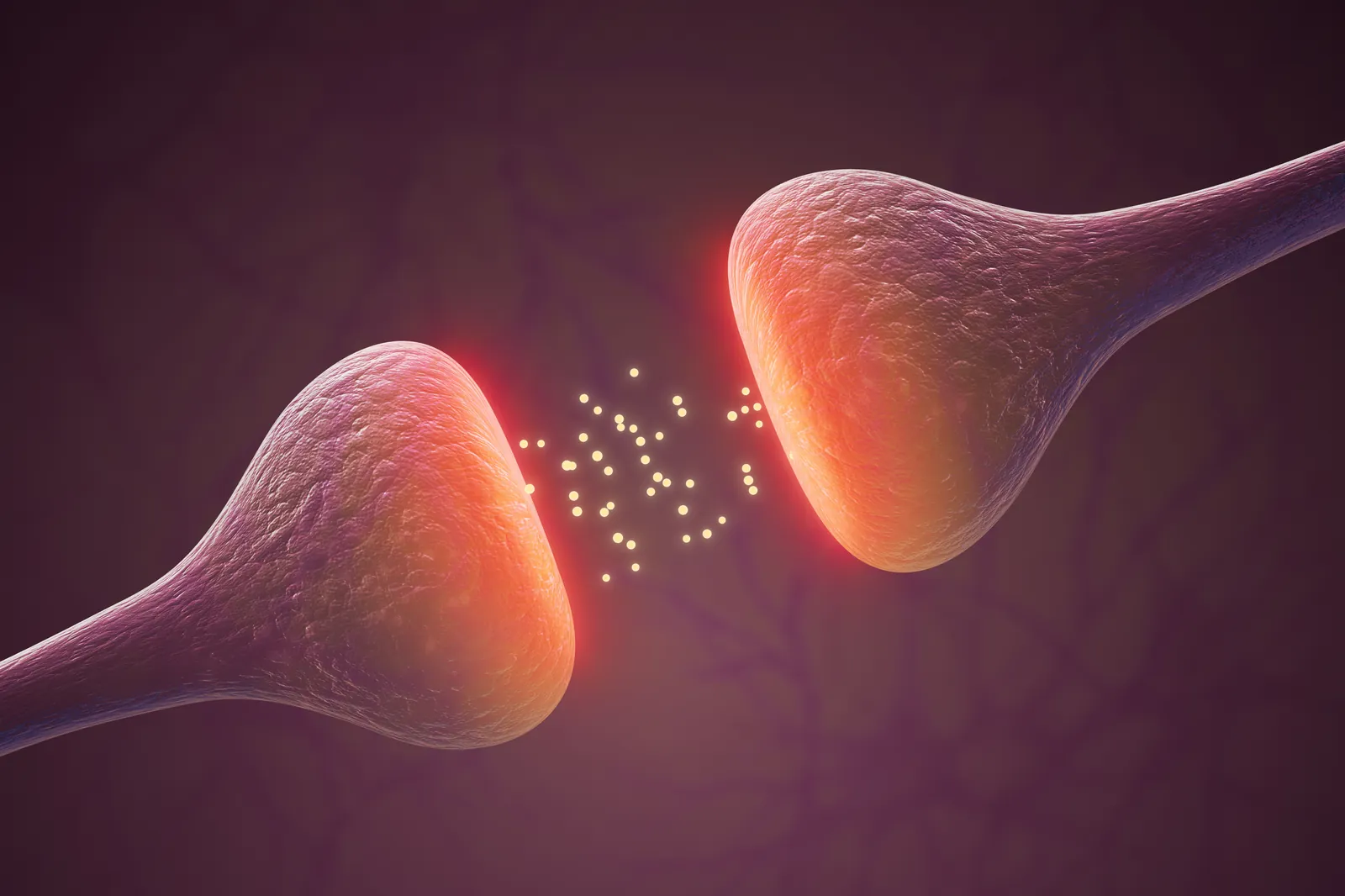
The name is misleading. Apomorphine is not an opioid and has nothing to do with morphine. It's a dopamine agonist: it activates dopamine receptors in the part of the brain that drives arousal. That's the paraventricular nucleus of the hypothalamus, where the brain initiates an erection.1 A PDE5 inhibitor waits at the end of the chain to strengthen a signal that has already arrived. Apomorphine works at the beginning, boosting the signal itself.
Apomorphine has been used safely in medicine for decades, mainly in Parkinson's disease, where its dopamine activity helps with movement. Its effect on erections was documented along the way: men given apomorphine for other reasons developed firmer and more reliable erections, and the mechanism made sense. Stimulate the brain's dopamine arousal circuitry, and the rest of the erectile process follows.
The evidence is real and substantial
Apomorphine has been tested in large, placebo-controlled trials in thousands of men, against the most demanding measure in the field: the share of attempts that produced an erection firm enough for intercourse.
The results held up. In pooled placebo-controlled trials, sublingual apomorphine produced erections firm enough for intercourse in about half of attempts, compared with a third on placebo.2 3 Onset was fast, with a median time to erection of about 18 minutes and most erections within half an hour.3 The benefit was strongest in men with mild to moderate ED, including men with common conditions like hypertension, diabetes, and heart disease.
Sublingual delivery is non-negotiable
Apomorphine only works if it's delivered correctly. Swallowed as an ordinary pill, the liver breaks it down before it reaches the brain. You'd need a large dose to get any effect, with higher risk of side effects.
Dissolved sublingually, under the tongue, it absorbs straight into the bloodstream and bypasses the liver. A small 2 mg dose reaches the brain quickly, helps produce the erection, and typically causes minimal side effects.3 It also isn't affected by food. (More on the science of the route in Why Sublingual Delivery Matters for ED.)
Why not the other brain-targeting options?
Apomorphine is not the only compound that can theoretically act on the brain to treat ED. But it is the one with the best combination of evidence, mechanism, and drug delivery. The alternatives show why.
Bremelanotide acts on a different brain pathway, the melanocortin system, and has real Phase II data in men with ED.4 But it isn't a pill. It's given by injection, with narrow timing, and in the U.S. it's only approved for libido in women, not ED in men. Be skeptical of any version sold as a tablet or troche: bremelanotide is a large peptide with extremely low absorption by mouth, even sublingually.
Oxytocin is a hormone the brain releases during arousal and bonding, which is why it comes up often as an ED candidate. The biology is plausible, but the human evidence for treating ED is close to zero. Again, be skeptical of any treatment touting its benefits.
Vitamin B12 and similar "stack" ingredients contain no arousal mechanism at all. Unless you're actually deficient, it likely won't help with erections. When you see them on an ED label, be skeptical yet again. That's marketing, not treatment.
Of every compound that acts on the brain's role in arousal, apomorphine is the only one with both a strong evidence base and a delivery method that works in the real world.
How I use it
I prescribe apomorphine for men who haven't responded well to PDE5 inhibitors. Its real strength shows when both halves of the process are treated together. Paired with a PDE5 inhibitor, it can help produce firmer and longer-lasting erections. (See The Case for Combination ED Treatment.)
The takeaway
Apomorphine works, it's safe, and it's backed by decades of clinical use and placebo-controlled trials. It treats the half of the problem that PDE5 inhibitors leave untouched.
If you've tried PDE5 inhibitors and been disappointed, the question worth asking a provider may not be whether to take a stronger version of the same pill. It may be time to treat the part of the process that hasn't been addressed.

Dr. Chughtai is a Board-Certified, academic urologist and a HELMD medical advisor. This article is for educational purposes and is not a substitute for individualized medical advice.
Read full bio →References
- Argiolas A, Melis MR. Central control of penile erection: role of the paraventricular nucleus of the hypothalamus. Prog Neurobiol. 2005;76(1):1–21. pubmed.ncbi.nlm.nih.gov
- Dula E, Keating W, Siami PF, et al; The Apomorphine Study Group. Efficacy and safety of fixed-dose and dose-optimization regimens of sublingual apomorphine versus placebo in men with erectile dysfunction. Urology. 2000;56(1):130–135. pubmed.ncbi.nlm.nih.gov
- Stief C, Padley RJ, Perdok RJ, Sleep DJ. Cross-study review of the clinical efficacy of apomorphine SL 2 and 3 mg: pooled data from three placebo-controlled, fixed-dose crossover studies. Eur Urol Suppl. 2002;1(3):12–20. europeanurology.com
- Molinoff PB, Shadiack AM, Earle D, et al. PT-141: a melanocortin agonist for the treatment of sexual dysfunction. Ann N Y Acad Sci. 2003;994:96–102. pubmed.ncbi.nlm.nih.gov
- Dhaliwal A, Gupta M. PDE5 Inhibitors. In: StatPearls [Internet]. StatPearls Publishing; 2023. ncbi.nlm.nih.gov