In my practice, the patients who are most frustrated are not the ones coming in for their first ED visit. It's the men who've already tried sildenafil or tadalafil and found they didn't work. By the time they reach me, the disappointment often grows into something heavier: the sense that they're broken, or that nothing can help. The real explanation is usually simpler: the drug they tried only addresses one half of a two-part process. To understand why, it helps to look at where an erection actually begins.
An erection starts in the brain, not the penis
A functional erection is not a single event. It's a sequence, and it begins well north of the waist.
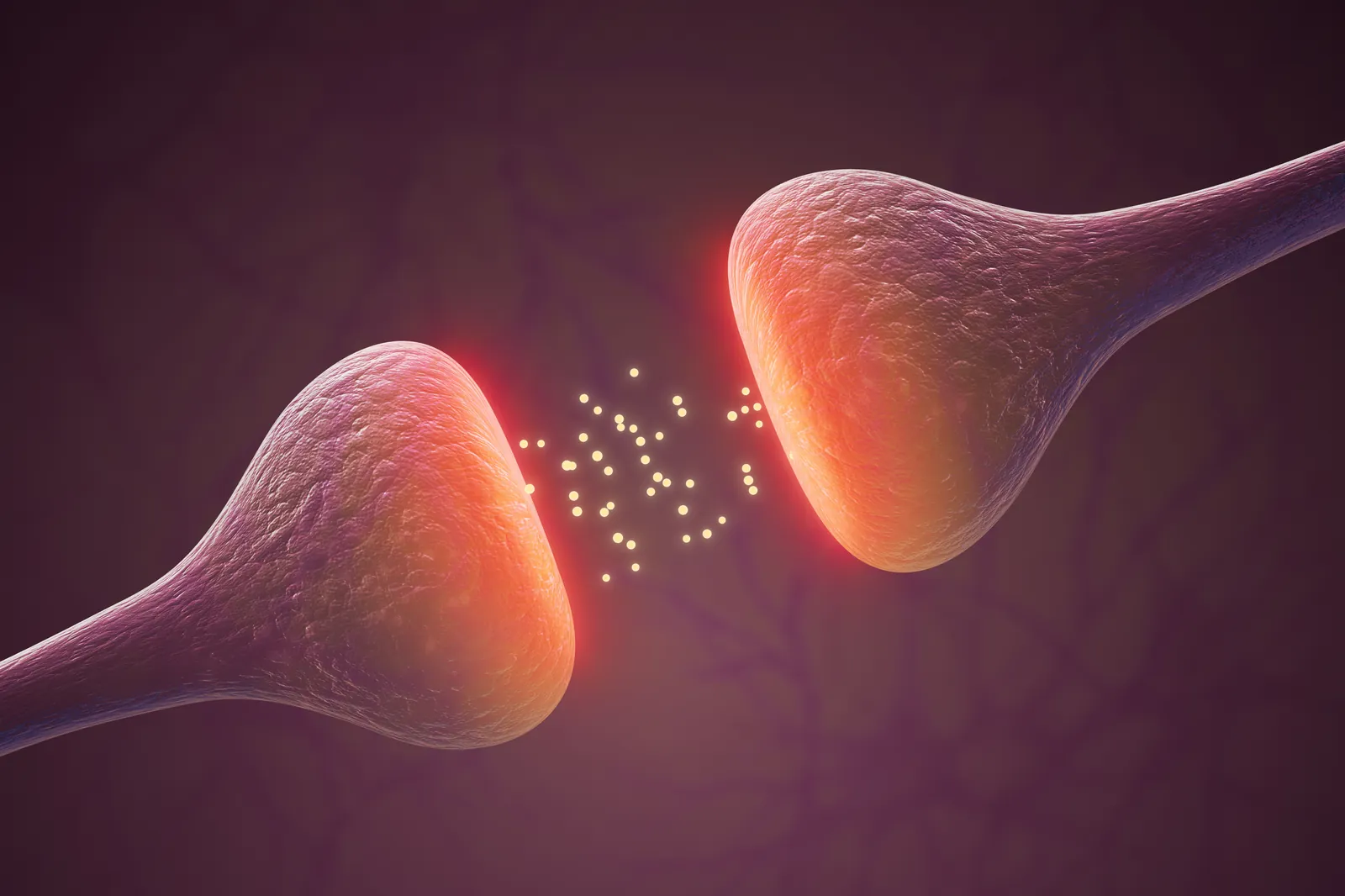
The first step is mental: central nervous system arousal. The signal originates in the brain, specifically in a region of the hypothalamus called the paraventricular nucleus.1 Think of it as the control room that gathers incoming arousal signals and, when there's enough of them, fires the command downstream. That command travels through the brain, down the spinal cord, out to the nerves and blood vessels of the penis. This is why ED is never purely a "below the belt" issue. The starting gun is in your head, and the rest of the body is waiting on it.
The second step is physical, and specifically vascular. Those signals trigger the release of nitric oxide in penile tissue, which relaxes the smooth muscle of the corpora cavernosa and lets blood flow in and stay trapped. These "hydraulics" are what most people picture when they hear erection.
Here's what gets lost: both steps have to work, and they have to work in order. The vascular response is downstream of the mental one. The brain initiates; the blood vessels respond. If the initiating signal is weak - whether from stress, age, neurological factors, low desire, or other causes - the downstream machinery may not receive a message strong enough to act upon.
What PDE5 inhibitors actually do
It's worth being precise about how the most common ED medications work. Sildenafil (Viagra) and tadalafil (Cialis) are phosphodiesterase type 5 inhibitors, or PDE5 inhibitors. They work exclusively on the second step. Once an arousal signal has reached the penis and nitric oxide has been released, the body produces a molecule called cyclic GMP, which does the actual work of relaxing smooth muscle and letting blood in. An enzyme called PDE5 breaks cyclic GMP back down. A PDE5 inhibitor blocks that breakdown, so cyclic GMP sticks around longer and the vascular response is stronger and lasts longer.
But if PDE5 breaks down the thing that gives you an erection, why does your body make it at all? Because cyclic GMP is a signal and PDE5 is the off switch. It clears cyclic GMP so the tissue can reset to baseline between erections. Without it, you wouldn't have better erections - you'd have erections that don't go away, which is a genuine medical emergency. PDE5 is necessary housekeeping, and a PDE5 inhibitor just turns it down for a few hours.
So a PDE5 inhibitor amplifies a response that arousal has already started. It does not create arousal. If the brain never sends a strong enough message, there's sparse cyclic GMP for the drug to protect, and no amount of blocking the off switch can preserve a signal that was barely there to begin with.
None of this is a knock on these drugs. PDE5 inhibitors are genuinely effective, well-studied medications, and for most men with primarily vascular ED, they do exactly what they're supposed to. The problem is that they're prescribed and marketed as if blood flow were the entire story, when for a substantial group of men, it isn't.
The 30–40% who don't get there
The numbers bear this out. A sizable number of men - somewhere in the range of 30–40% - don't get a satisfactory response from PDE5 inhibitors alone.2 3 That figure is consistent across the urological literature.
Some of that non-response is fixable with better technique: taking the medication on an empty stomach, allowing enough time before sex, optimizing the dose, or trying a different drug in the same class.
But for many men, the problem starts with arousal, and treating just the vascular response is not effective. This is the population that tends to bounce between higher doses and different brands of the same drug class, growing convinced that nothing works. For many of these men, it's just that one thing - a PDE5 inhibitor - doesn't work.
Treating the whole pathway
So can you treat that first half of the pathway, the mental arousal step? Yes, and the literature backs it up. The dopamine circuitry in the paraventricular nucleus that initiates arousal can be targeted directly. These are drugs that act on the central arousal signal itself - a fundamentally different mechanism from the PDE5 inhibitors that act on blood flow. A handful of agents have been studied for exactly this. They are not equal:
- Apomorphine: a dopamine agonist that acts directly on those arousal centers in the brain. It has the strongest clinical track record of any central-acting option: it was approved and widely prescribed in Europe for ED, with placebo-controlled trials showing it produced erections firm enough for intercourse across a broad range of patients. It has to be taken sublingually, dissolved under the tongue, which lets it reach the brain quickly at a low dose and sidesteps many of the side effects that plagued older oral forms. Delivered correctly, it's the clearest example of effectively treating the signal.4
- Bremelanotide: a centrally acting agent that works on melanocortin receptors in the hypothalamus and has real Phase II ED data behind it.5 The limitation is significant: it cannot be delivered as a tablet. It requires injection (or, in earlier research, a nasal spray) and careful timing, and in the U.S. it's only FDA-approved for a libido condition in women, not for ED in men. Promising mechanism, inconvenient package.
- Oxytocin: mechanistically plausible and frequently discussed, but the human clinical evidence for treating ED is almost zero. Interesting biology, not yet a proven treatment, and I'd be cautious of any brand selling it as one.
- Vitamin B12 and other "stack" ingredients: you'll see these bundled into men's formulations with vague promises of an "energy boost" or better performance. But if you're not deficient (the vast majority of men aren't), it does nothing for your erections.
Of the agents that actually act on the brain's role in arousal, apomorphine is the one with both the mechanism and the clinical evidence. I've gone deep on apomorphine specifically - the clinical evidence, the European approval history, and what I've seen in my own practice - here. It covers the data behind this molecule and why it's becoming a valuable tool in ED treatment.
The takeaway
If you've tried a PDE5 inhibitor and been let down, it's worth reframing what that result actually told you. It didn't tell you that medication can't help you. It may only have told you that an approach - one working on the vascular half of the equation - wasn't the right fit for your problem.
An erection begins in the brain and finishes in the blood vessels. The most important conversation to have with a qualified provider isn't "which pill works best." It's "which treatment is best for me" - and then matching the treatment to the answer.

Dr. Chughtai is a Board-Certified, academic urologist and a HELMD medical advisor. This article is for educational purposes and is not a substitute for individualized medical advice.
Read full bio →References
- Argiolas A, Melis MR. Central control of penile erection: role of the paraventricular nucleus of the hypothalamus. Prog Neurobiol. 2005;76(1):1–21. pubmed.ncbi.nlm.nih.gov
- Hua V, Roth B, Shumaker A, Bole R, Bajic P. What are options for my patients with erectile dysfunction who have an unsatisfactory response to PDE5 inhibitors? Cleve Clin J Med. 2024;91(11):667–670. ccjm.org
- Dhaliwal A, Gupta M. PDE5 Inhibitors. In: StatPearls [Internet]. StatPearls Publishing; 2023. ncbi.nlm.nih.gov
- Heaton JPW. Apomorphine: an update of clinical trial results. Int J Impot Res. 2000;12(Suppl 4):S67–S73. pubmed.ncbi.nlm.nih.gov
- Molinoff PB, Shadiack AM, Earle D, et al. PT-141: a melanocortin agonist for the treatment of sexual dysfunction. Ann N Y Acad Sci. 2003;994:96–102. pubmed.ncbi.nlm.nih.gov