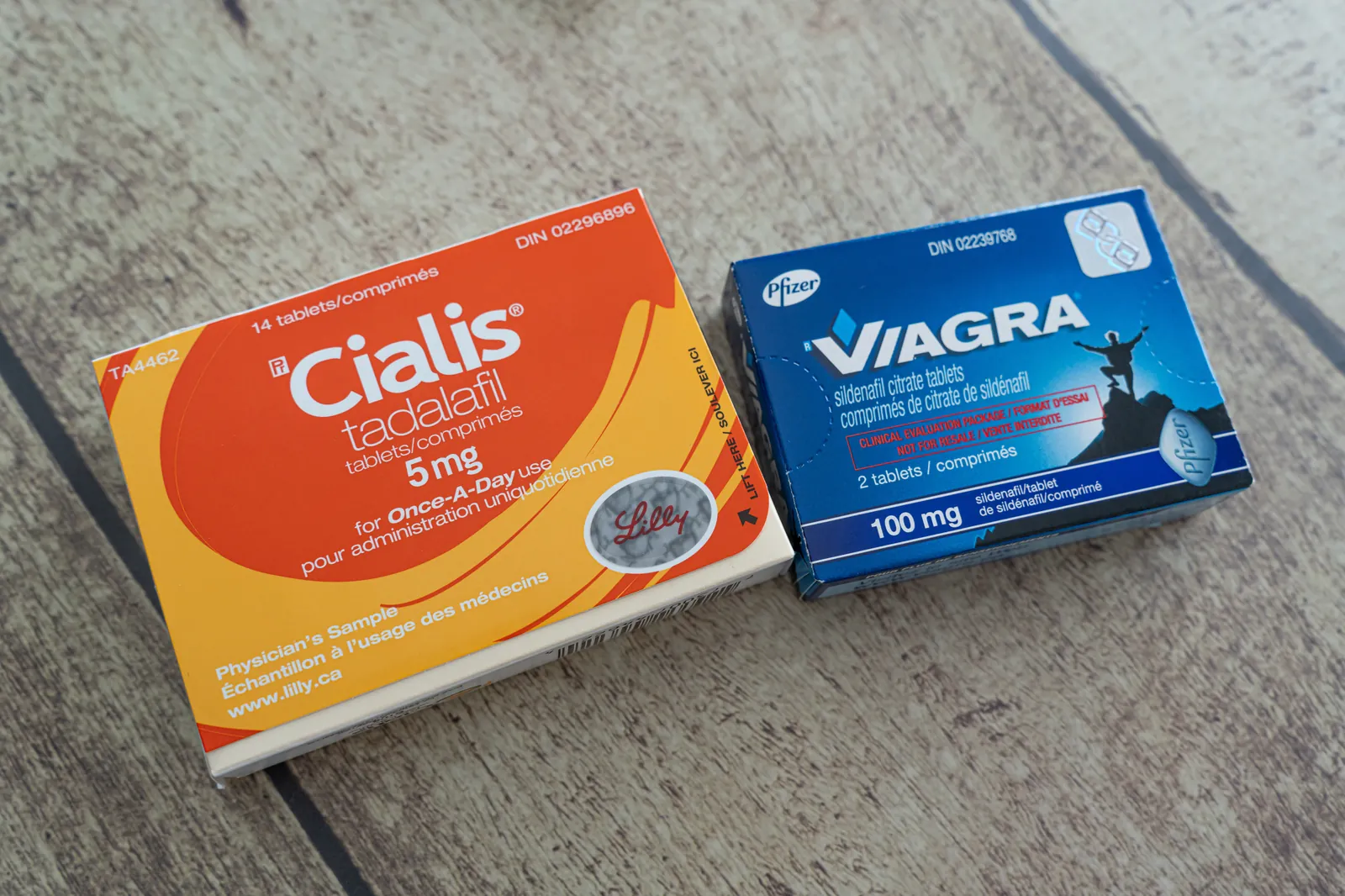
Why daily instead of as-needed
Most men who consider medication for erectile dysfunction default to the on-demand model: take a pill before sex, wait 30 to 60 minutes, hope it works. That model has been the standard for two decades, and it's what most people picture when they hear "Cialis" or "Viagra."
There is another way to take tadalafil, and for a growing share of men it's the better one: a small dose, taken every day, that removes the timing question entirely.
Daily tadalafil is FDA-approved at 2.5mg and 5mg. You take it once a day at roughly the same time, regardless of when or whether sex is planned. Because tadalafil has a half-life of about 17.5 hours, steady daily dosing keeps active drug in the bloodstream continuously, rather than producing the peak-and-trough pattern of on-demand use.1
The result is a different clinical experience: no window to plan within, no meal to time around, no anxiety about whether you took the pill early enough. For many men, that shift is the entire point.
This guide covers what daily tadalafil is, what the evidence shows for its two FDA-approved uses (ED and benign prostatic hyperplasia), what emerging research suggests about broader cardiovascular and cognitive outcomes, how to think about the 2.5mg vs 5mg dosing decision, and who is and isn't a good candidate.
How tadalafil works
Tadalafil is a phosphodiesterase type 5 (PDE5) inhibitor. PDE5 is an enzyme that breaks down cyclic GMP, a molecule central to how blood vessels dilate. By blocking PDE5, tadalafil lets cyclic GMP accumulate, relaxing the smooth muscle lining blood vessels and improving blood flow.
In the penis, this means improved blood flow into the corpus cavernosum during sexual stimulation, which is the mechanism behind its ED indication. In the prostate and bladder, PDE5 inhibition relaxes smooth muscle in a way that eases urinary flow, which is the basis for its BPH indication. And systemically, PDE5 inhibition produces mild, generalized vasodilation that has drawn interest for its potential effects on cardiovascular health and cognition (more on this below).
The 17.5-hour half-life is what makes daily dosing practical. Sildenafil (Viagra) has a half-life of about 4 hours, and vardenafil is similar. Only tadalafil has the pharmacokinetic profile to support once-daily dosing at low strengths while maintaining continuous therapeutic effect. Steady-state plasma concentrations are reached within five days of consistent daily use.1
Efficacy for erectile dysfunction
Tadalafil 5mg once daily was FDA-approved for ED in 2008. The approval was based on multiple randomized, placebo-controlled trials showing significant improvements in the International Index of Erectile Function (IIEF) domain scores and in the Sexual Encounter Profile questions (SEP2: penetration, SEP3: completion of intercourse).
Across these trials, daily tadalafil at 5mg produced improvements in erectile function comparable to on-demand dosing at 20mg. The trade-off is spontaneity for consistency: on-demand dosing produces higher peak concentrations at the moment of activity, while daily dosing produces steady-state coverage at all times.
The 2.5mg dose is FDA-approved as a starting dose for men who are new to tadalafil or who may be sensitive to side effects. It shows a smaller absolute improvement in IIEF scores than 5mg but with a more favorable side effect profile, and many men can be titrated up to 5mg after an initial trial period if 2.5mg is insufficient.1
One practical note: daily tadalafil takes time to reach full efficacy. Most men notice meaningful improvement within the first week but don't reach maximum benefit until steady state is fully established, typically after 5 to 7 days of consistent dosing. That's unlike on-demand PDE5 inhibitors, which take effect within an hour of a single dose.
A short online visit lets a licensed provider recommend an approach based on your health and goals.
Efficacy for benign prostatic hyperplasia and lower urinary tract symptoms
In 2011, tadalafil 5mg daily received a second FDA approval, this time for the treatment of the signs and symptoms of benign prostatic hyperplasia (BPH). Two years later, the FDA also approved it for men who have both BPH and ED, recognizing the substantial overlap between the two conditions in aging men.
BPH is the enlargement of the prostate gland that affects most men as they age. Its downstream effects, collectively called lower urinary tract symptoms (LUTS), include weak urinary stream, difficulty starting urination, urinary frequency (especially nighttime awakening to urinate), urgency, and incomplete bladder emptying. LUTS are typically measured using the International Prostate Symptom Score (IPSS), a validated questionnaire with a range of 0 to 35.
The evidence base for tadalafil in BPH is strong. A 2011 international randomized, double-blind, placebo-controlled trial of 325 men with BPH-LUTS found that tadalafil 5mg daily produced a mean IPSS reduction of 5.6 points compared to 3.6 points with placebo (p=0.004). Improvements were apparent within one week and reached statistical significance by four weeks.2
A 2021 meta-analysis of 13 studies (15 RCTs) confirmed and extended these findings. Across the pooled data, tadalafil 5mg daily produced significant improvements versus placebo in total IPSS (mean difference -1.97, p<0.00001), voiding subscore (-1.30, p<0.00001), storage subscore (-0.70, p<0.00001), and quality of life score (-0.29, p<0.00001).3
Pooled subgroup analyses have shown that IPSS improvements are consistent across age groups (up to age 65 and above), baseline severity, testosterone levels, and prostate volume.4 Efficacy is somewhat attenuated in men aged 75 and older, likely reflecting the greater burden of concomitant medications and comorbidities in that group.5
For men with both ED and BPH, daily tadalafil is uniquely useful: it is the only medication FDA-approved for both indications at once, so a single drug addresses two conditions that commonly coexist.
Emerging evidence: cardiovascular and cognitive outcomes
Beyond its two FDA-approved indications, a growing body of observational research has examined whether long-term PDE5 inhibitor use is associated with broader health outcomes. It's worth being precise about what this evidence does and does not show.
What the evidence shows: Multiple large, well-designed observational studies have found statistically significant associations between PDE5 inhibitor use and lower rates of major adverse cardiovascular events (MACE), all-cause mortality, and dementia.
What the evidence does not show: These studies cannot establish causation. Men prescribed PDE5 inhibitors differ from those who are not in ways that are difficult to fully control for, even with propensity matching. They are more likely to be engaged with the healthcare system, more likely to have insurance, and may differ in unmeasured ways that independently affect long-term outcomes.
With that caveat firmly in place, the associations are consistent, and the effect sizes are notable.
A 2024 systematic review and meta-analysis published in the European Heart Journal Open pooled data from cohort studies with a minimum follow-up of six months. PDE5 inhibitor use was associated with a 22% lower risk of MACE (RR 0.78, 95% CI 0.69-0.89) and a 30% lower risk of all-cause mortality (RR 0.70, 95% CI 0.56-0.87).6
A separate 2024 analysis published in the American Journal of Medicine used the TriNetX database covering 50 million US men. Over a three-year follow-up period, tadalafil users had a 34% lower risk of all-cause mortality (RR 0.66), 27% lower risk of myocardial infarction (RR 0.73), 34% lower risk of stroke (RR 0.66), and 32% lower risk of dementia (RR 0.68) compared to matched non-users. Tadalafil showed larger effect sizes than sildenafil across most outcomes.7
A US commercial insurance claims study of approximately 29,000 men, published in Clinical Cardiology in 2024, found that tadalafil users had a 44% lower rate of all-cause mortality (HR 0.56, p<0.001) compared to matched controls. Men with the highest cumulative tadalafil exposure showed the largest reduction in cardiovascular events (HR 0.40, p<0.001), suggesting a dose-response relationship.8
The proposed mechanism for these associations is straightforward: chronic PDE5 inhibition improves endothelial function, the ability of blood vessels to dilate appropriately in response to demand. Endothelial dysfunction is one of the earliest measurable changes in atherosclerosis, and improving it is plausibly protective against downstream cardiovascular events. Some randomized trials have documented improvements in flow-mediated dilation, a validated measure of endothelial function, with daily tadalafil use, though findings are not fully consistent across trials.9
None of this is grounds for prescribing tadalafil to prevent cardiovascular disease or dementia. It is grounds for the more modest observation that daily tadalafil, taken for its approved indications, is being associated in large-scale data with encouraging long-term outcomes. Whether that association reflects causation will require prospective randomized trials with long enough follow-up periods to measure hard endpoints. Several such trials are being discussed, but none has yet reported.
Tadalafil, blood flow, and physical performance
Tadalafil's core action is vascular: by sustaining NO-cGMP signaling, daily dosing keeps blood vessels relaxed and blood moving freely - including to skeletal muscle. It's the same mechanism behind its cardiovascular profile, working around the clock rather than in a single window.
That has real implications for an active life. More blood flow means more oxygen and nutrients delivered to working muscle, which is why daily PDE5 inhibition has drawn serious scientific interest for performance and recovery. In controlled studies, PDE5 inhibition increased blood flow to contracting muscle in older men10: precisely the group whose vessels have begun to stiffen with age. It restored normal muscle blood-flow regulation in men whose signaling was impaired,11 and daily tadalafil has been shown to improve endothelial function, the ability of blood vessels to dilate on demand.9
For men over 40 - the core daily-tadalafil demographic - that steady vascular support is an everyday advantage, in the gym and out of it.
2.5mg vs 5mg: how to think about dosing
Both doses are FDA-approved for ED. Only 5mg is FDA-approved for BPH. The choice between them typically comes down to three factors.
Sensitivity to side effects. Men who are new to PDE5 inhibitors, men on medications that may amplify tadalafil's effects (see the safety section below), and men who have had adverse experiences with other PDE5 inhibitors are often started at 2.5mg. If tolerated well after several weeks, the dose can be titrated up to 5mg if additional efficacy is needed.
Target indication. For men whose primary reason for taking tadalafil is BPH-LUTS, 5mg is the appropriate dose because it is the dose used in the trials that supported FDA approval for that indication. For men whose primary indication is ED, either dose is a reasonable starting point.
Response. Some men respond well to 2.5mg and see no meaningful additional benefit from 5mg. Others respond only partially to 2.5mg and need the higher dose to achieve their treatment goals. Because tadalafil takes time to reach steady state, dose changes should be evaluated over weeks, not days.
The right approach is generally to start at the lower effective dose and titrate up only if needed. This minimizes side effect burden and cost.
Side effects and safety
The side effects of daily low-dose tadalafil are generally mild and well-characterized from over two decades of clinical use.
The most common adverse effects reported in clinical trials are headache, back pain, dyspepsia (indigestion), myalgia (muscle aches), nasal congestion, and flushing. Most are transient and dose-dependent. In placebo-controlled trials, the discontinuation rate due to adverse events for daily tadalafil was low, generally in the 2 to 4 percent range, and most patients who continued treatment reported that side effects diminished over the first several weeks of use.1
Back pain and myalgia deserve specific mention because they are the side effects most often unique to tadalafil (relative to other PDE5 inhibitors). In the 1-year open-label extension studies, back pain was reported in 5.5% of patients and myalgia in 1.3%. Most cases were mild and resolved without treatment; when treatment was needed, acetaminophen or NSAIDs were generally effective.1
Serious adverse events are rare but important to understand:
- Nitrate interaction. Tadalafil is absolutely contraindicated in men taking any form of organic nitrate (including nitroglycerin for angina, isosorbide, and recreational "poppers"), because the combination can produce severe and potentially fatal hypotension.
- Priapism. Erections lasting more than four hours are a medical emergency and require immediate treatment to prevent permanent damage. This is rare with daily low-dose tadalafil.
- Vision changes. Very rare cases of non-arteritic ischemic optic neuropathy (NAION), which can cause sudden vision loss, have been reported with PDE5 inhibitors. Men with a history of NAION should not take tadalafil.
- Hearing changes. Very rare cases of sudden hearing loss have been reported. Any sudden decrease or loss of hearing during use should prompt immediate discontinuation and medical evaluation.
- Alpha-blocker interaction. Combining tadalafil with alpha-blockers used for BPH or hypertension can cause symptomatic hypotension. Dose adjustment or careful monitoring is needed.
Tadalafil should be used cautiously (or not at all) in men with severe hepatic impairment, severe renal impairment (creatinine clearance below 30 mL/min), unstable cardiovascular disease, or a recent history of stroke or heart attack.
Who daily tadalafil is right for
Daily tadalafil tends to be a good fit for men who:
- Value spontaneity and want to eliminate the timing question associated with on-demand dosing
- Have moderate to frequent sexual activity, where daily dosing pencils out economically compared to buying individual on-demand doses
- Have both ED and BPH-LUTS symptoms, and want to address both with a single medication
- Have found on-demand PDE5 inhibitors inconsistent or difficult to plan around
- Are interested in the emerging evidence around long-term cardiovascular and cognitive outcomes and want to take a medication that is being associated with those benefits in large observational studies (with appropriate caveats about causality)
Daily tadalafil is generally not the best choice for men who:
- Have very infrequent sexual activity (once or twice per month or less), where on-demand dosing is more cost-effective
- Are taking nitrates or certain alpha-blockers
- Have severe hepatic or renal impairment
- Have unstable cardiovascular disease or recent MI/stroke
- Have had adverse experiences with PDE5 inhibitors that are unlikely to resolve with a lower dose
- Prefer or respond better to sildenafil, which is not available in a daily formulation
Bottom line
Daily tadalafil at 2.5mg or 5mg is one of the most well-studied and well-tolerated medications in men's health. It has two FDA-approved indications with strong RCT evidence behind them, a favorable long-term safety profile, and a growing body of observational data suggesting broader potential health benefits that will need to be confirmed in prospective trials.
For men considering treatment for ED, BPH, or both, daily tadalafil is a meaningful alternative to the on-demand model that has dominated the category for two decades. The choice between daily and on-demand isn't about which drug is better in isolation. It's about which pattern of dosing fits how a man actually wants to live.

Dr. Brant is a Board-Certified Urologist focused on men's health and sexual medicine, and the author of 100+ peer-reviewed works and textbook chapters.
Read full bio →References
- US Food and Drug Administration. Cialis (tadalafil) tablets, full prescribing information. accessdata.fda.gov ↩
- Porst H, Kim ED, Casabé AR, et al. Efficacy and safety of tadalafil once daily in the treatment of men with lower urinary tract symptoms suggestive of benign prostatic hyperplasia: results of an international randomized, double-blind, placebo-controlled trial. European Urology. 2011;60(5):1105-1113. pubmed.ncbi.nlm.nih.gov ↩
- Chen Y, Chen R, Xie K, et al. Efficacy and Safety of 12-week Monotherapy With Once Daily 5 mg Tadalafil for Lower Urinary Tract Symptoms of Benign Prostatic Hyperplasia: Evidence-based Analysis. Frontiers in Medicine. 2021;8:744012. ncbi.nlm.nih.gov ↩
- Brock G, Broderick G, Roehrborn CG, et al. Tadalafil once daily in the treatment of lower urinary tract symptoms suggestive of benign prostatic hyperplasia in men with or without erectile dysfunction: subgroup analyses of pooled data from 4 multinational, randomized, placebo-controlled clinical studies. Urology. 2013;82(2):390-396. sciencedirect.com ↩
- Oelke M, Shinghal R, Sontag A, et al. Efficacy and safety of tadalafil 5 mg once daily in the treatment of lower urinary tract symptoms associated with benign prostatic hyperplasia in men aged ≥75 years: integrated analyses of pooled data from multinational, randomized, placebo-controlled clinical studies. BJU International. 2017. pubmed.ncbi.nlm.nih.gov ↩
- Wei H, Sundararaj S, Sundararaj S, et al. Long-term effects of phosphodiesterase-5 inhibitors on cardiovascular outcomes and death: a systematic review and meta-analysis. European Heart Journal Open. 2024. ncbi.nlm.nih.gov ↩
- Jehle DVK, Sunesra R, Uddin H, et al. Benefits of Tadalafil and Sildenafil on Mortality, Cardiovascular Disease, and Dementia in Patients With Erectile Dysfunction and Lower Urinary Tract Symptoms. American Journal of Medicine. 2024. amjmed.com ↩
- Kloner RA, Stanek E, Crowe C, et al. The association of tadalafil exposure with lower rates of major adverse cardiovascular events and mortality in a general population of men with erectile dysfunction. Clinical Cardiology. 2024. onlinelibrary.wiley.com ↩
- Pattanaik S, Kaundal P, Mavuduru RS, et al. Endothelial Dysfunction in Patients With Erectile Dysfunction: A Double-Blind, Randomized-Control Trial Using Tadalafil. Sexual Medicine. 2019;7(1):41-48. pubmed.ncbi.nlm.nih.gov ↩
- Effect of PDE5 inhibition on the modulation of sympathetic α-adrenergic vasoconstriction in contracting skeletal muscle of young and older recreationally active humans. American Journal of Physiology-Heart and Circulatory Physiology. 2015. doi:10.1152/ajpheart.00653.2015. journals.physiology.org ↩
- Martin EA, Barresi R, Byrne BJ, et al. Tadalafil alleviates muscle ischemia in patients with Becker muscular dystrophy. Science Translational Medicine. 2012;4(162):162ra155. pmc.ncbi.nlm.nih.gov ↩